
The Federation of Indian Export Organisations (FIEO) has appealed to the Reserve Bank of India (RBI) for liquidity support to Indian exporters, citing a significant increase in freight costs and extended payment cycles due to the ongoing West Asia conflict.

State Bank of India's latest report highlights a 'chalk and cheese' divide in the Reserve Bank of India's recent policy communications, with the Monetary Policy Committee minutes showing a hawkish tone while the Governor's statements are more data-dependent, leading to market uncertainty regarding future interest rate hikes.

Economists widely anticipate the Reserve Bank of India's Monetary Policy Committee will increase the repo rate by 50 basis points, likely split between the October and December meetings, as retail inflation is projected to peak at 6.1 per cent in the third quarter, exceeding the RBI's tolerance limit.

The 16th Finance Commission, led by Arvind Panagariya, has recommended maintaining the states' share in central taxes at 41% for the five-year period starting April 1, 2026. The government has accepted this recommendation, with Rs 1.4 lakh crore allocated to states for FY 2026-27 as Finance Commission Grants.

The government has extended the tenure of the 16th Finance Commission by one month till November 30. The 16th Finance Commission was constituted by the government on December 31, 2023, with former Niti Aayog vice-chairman Arvind Panagariya as its Chairman.

The consumer price index (CPI)-based inflation hitting an all-time low in October would encourage the six-member monetary policy committee (MPC) of the Reserve Bank of India (RBI) to cut the policy repo rate in its upcoming December 3-5 meeting. However, the July-September GDP growth, expected to be above 7 per cent, may act as a deterrent.

Changing aspirations and strong rural demand could explain why core inflation may not decline fast enough.

'If the RBI now only prints Rs 100 in small denomination notes and the remaining amount is printed in Rs 500 and Rs 2,000 denominations, then by March-end the central bank can completely normalise the cash crunch situation.'

The per capita income of Indians as gleaned from income-tax filing is expected to increase from Rs 2 lakh in FY23 to Rs 14.9 lakh in FY47, coinciding with 100 years of the country's Independence, according to SBI Research. In dollar terms it will increase from about $2,500 in FY23 to $12,400 in FY47. Soumya Kanti Ghosh, group chief economic adviser, State Bank of India, said the weighted mean income was Rs 4.4 lakh in AY14. That rose to Rs 13 lakh in FY23.

Job creation, improving farm productivity, and mobilising public funds for infrastructure development were some of the issues that figured during the interaction between Prime Minister Narendra Modi and economists ahead of the 2025-26 Union Budget. The prime minister on Tuesday met eminent economists and sectoral experts at NITI Aayog to hear their views and suggestions for the upcoming Budget. Union Finance Minister Nirmala Sitharaman is scheduled to present the Budget for 2025-26 in the Lok Sabha on February 1, 2025.

The change in stance to neutral from accommodative in the June monetary policy meeting does not necessarily signal that the Reserve Bank of India's (RBI's) rate setting body - monetary policy committee (MPC) - will go on a prolonged pause on rate cuts going forward, believe experts.

The price hikes during Covid were more because of supply chain and logistics disruptions caused by the pandemic and the Ukraine war rather than firms increasing prices because of higher pricing power, a report by State Bank of India (SBI) said. "It is thus incorrect to infer that concentration power dictated pricing capacity of firms, thus resulting in unyielding core inflation," the report authored by Soumya Kanti Ghosh, group chief economic adviser, SBI, said. A recent research article by former Reserve Bank of India (RBI) deputy governor Viral Acharya had observed that persistence of core inflation in India is due to purchasing power of top-five corporate houses.

The GDP growth is expected to be about 6.3 per cent in the current fiscal year, a tad lower than the government's estimate of 6.4 per cent, owing to several factors such as weak demand, SBI research report said on Wednesday. According to the first advance estimates (FAE) of National Income for 2024-25 released by the National Statistics Office (NSO), released on Tuesday, India's economic growth rate is estimated to slip to a four-year low of 6.4 per cent in 2024-25, because of poor showing by the manufacturing and subdued investments.

The net financial savings of the household sector has moderated to 5.1% of GDP in FY23 from 7.6 per cent in FY20, as households shifted their savings to physical assets amid low interest rates during the pandemic, according to State Bank of India's (SBI) Research report.

Citing a weak manufacturing sector coupled with the steep margin compression, SBI Research has pencilled in the country's GDP growth for the second quarter at 5.8 per cent, down 30 basis points from average estimates. The government will release the official numbers on November 30. In a report on Monday, SBI Research headed by Soumya Kanti Ghosh said corporate results, operating profit of companies, excluding banking and financial sector, degrew by 14 per cent in Q2FY23 as against 35 per cent growth in Q2FY22, though the top line continued to grow at a healthier pace.

RBI projects GDP growth in FY16 at 7.8 per cent, 30 bps higher than FY15. However, this comes with a downward bias.

The country's real GDP growth in the first quarter will be better than the Reserve Bank's estimate of 8 per cent, economists said on Tuesday. Economists at the country's largest lender SBI pegged the growth at 8.3 per cent while domestic rating agency Icra estimated it to come even higher at 8.5 per cent. The Reserve Bank of India (RBI), which expects the GDP to grow at 6.5 per cent in FY24, has estimated a growth of 8 per cent in the April-June period.
According to Soumya Kanti Ghosh, chief economic advisor of the State Bank of India group, a 50 bps rate cut is a possibility, but 25 bps is more likely.

The Reserve Bank of India (RBI) will stay away from changing key rates - including the reverse repo rate - this fiscal in the backdrop of Omicron. However, it will continue to shape the rate movements through liquidity market operations. Soumya Kanti Ghosh, group chief economic advisor, State Bank of India, said whether Omicron surge or not, there is not going to be any hike this year. However, the central bank may continue to shape rates through market operations.

Softening of global commodity prices might not help much

The payroll estimates, released by the EPFO based on its enrolment, threw up some contrasting trend between September 2017 and February 2018.

Retail depositors are earning negative returns on their bank deposits and hence, there is a need for reviewing taxes on interest earned, economists at the country's largest lender SBI have said. If not for all the depositors, the taxation review should be carried out for at least the deposits made by senior citizens who depend on the interest for their daily needs, the economists led by Soumya Kanti Ghosh said in a note, which pegged the overall retail deposits in the system at Rs 102 lakh crore. At present, banks deduct tax at source at the time of crediting interest income of over Rs 40,000 for all the depositors, while for senior citizens the taxes set-in if the income exceeds Rs 50,000 per year.

Official data released on Friday said the GDP is estimated to have grown by 5.7 per cent for the April-June period, as against a 4.6 per cent growth notched for the same period year ago.

A combination of factors, including heavy investments in US Treasury bonds and dollar sales at a healthy profit, facilitated the Indian central bank in transferring a record surplus of Rs 2.11 trillion to the government for 2023-24 (FY24). The RBI's dollar purchases increased in FY24, supported by robust capital inflows endorsing the economy's health.

Following the demonetisation move, the recast in direct tax moves is expected to give a boost the economy.

House economists at the nation's largest lender State Bank of India (SBI) have urged the government to budget for nursing the pandemic-ravaged economy and not to focus too much on fiscal consolidation as there is a need for more stabilisation measures to sustain the fledgling recovery. And one of the best way to begin the new fiscal is to complete the share sale of LIC this fiscal. This can go a long way in repairing the overstretched balance sheet which in turn will bring down fiscal deficit to a much lower 6.3 per cent in FY23 as the public coffers will be left with a cash surplus of at least Rs 3 lakh crore to begin the new fiscal, SBI chief economist Soumya Kanti Ghosh said in a pre-Budget note on Wednesday.

Net job creation in the economy fell by 16.9 lakh in FY21 over the previous fiscal, shows an SBI Research analysis of EPFO payroll data. However, the FY21 numbers are better than the FY20 net job creation, which had declined by 28.9 lakh, further cementing the view that the economy is not creating new employment opportunities. The latest EPFO data shows that net new EPF subscribers stood at 94.5 lakh in FY21, and NPS added 5.82 lakh, taking the cumulative net addition to 100.4 lakh, which is marginally down from 102.3 lakh in FY20.

The report said that "we believe, institutions are more important than individuals" and ultimately what is important is the credibility and the independence of any institution and nothing else.

'An eerie similarity with 2019 inflation trajectory could now mean that the RBI and market inflation estimates could go awry.'

'The top 10 industries encompass 84% of the total new payrolls, indicating that industry is coming on steam after the initial hiccups following GST,' say Soumya Kanti Ghosh and Pulak Ghosh.
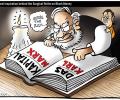
Adjusted for inflation, the earlier scheme would have collected Rs 25,000 crore.

The economy may grow by around 7 per cent this financial year as estimated by the Monetary Policy Committee (MPC) of the Reserve Bank of India (RBI), say economists with various organisations. The first advance estimates for 2023-24 will be released on Friday by the National Statistical Organisation (NSO), an exercise done for calculating ratios such as the fiscal deficit. The interim Budget will be presented on February 1.

The jury is still out on the decision to demonetise high value currency notes on November 8, 2016, with the government claiming it has helped greater formalisation of the economy while critics saying it has failed to curb black money and reduce dependence on cash. On November 8, six years ago, Prime Minister Narendra Modi had announced the demonetisation of old Rs 1,000 and Rs 500 banknotes and one of the key objectives of the unprecedented decision was to promote digital payments and curb black money, besides eliminating terror funding. As per a Reserve Bank data, currency with the public has jumped to a new high of Rs 30.88 lakh crore an October 21, indicating that cash usage is still substantial even six years after the demonetisation move.

If you are a retail investor, you can allocate a portion of the portfolio to the medium- to long-term debt fund category instead of gilt funds.

The payroll data has been revised downwards for each of the nine months between September 2017 and May this year

ASK Wealth Advisors says 5 million, CMIE's estimate is 2 million and Ghosh & Ghosh said it was 7 million!

Leading economists have pencilled in a high 13-15.7 per cent uptick in the economy in the first quarter of 2022-23 with an upward bias. Soumya Kanti Ghosh, the group chief economic adviser at State Bank of India, on Tuesday said he expects the GDP to clip past 15.7 per cent in the first quarter with more chances of the final numbers printing in higher, while Aditi Nayar, the chief economist at the rating agency Icra, said the economy will grow much lower at 13 per cent in the June quarter. The national statistical office will announce the first quarter GDP numbers later next week.

Pencilling in a GDP growth in third and fourth quarters, SBI Research on Wednesday revised its contraction forecast for the current fiscal year to 7 per cent. The agency had earlier forecast a 7.4 per cent contraction in 2020-21 GDP numbers. In April-September, the economy contracted 15.7 per cent but the second half may see a surprise 2.8 per cent growth, if the SBI analysis turns out to be correct.

'There is a misconception that gold is a dead asset in India.' 'Around 30 per cent of agriculture loans are collateralised by gold, Soumya Kanti Ghosh and Saket Hishikar, economists at the SBI, point out.
Higher for longer' may be the narrative in the developed markets, but interest rates might not stay high for very long in India, with a section of the market expecting rate cuts to begin this year. The six-member Monetary Policy Committee of Reserve Bank of India (RBI) decided to keep interest rates unchanged at 6.5 per cent in the April review - after hiking the policy repo rate in six previous meetings. RBI Governor Shaktikanta Das emphasised that the pause was only for the April policy and that the central bank was ready to act if the situation demanded.
